
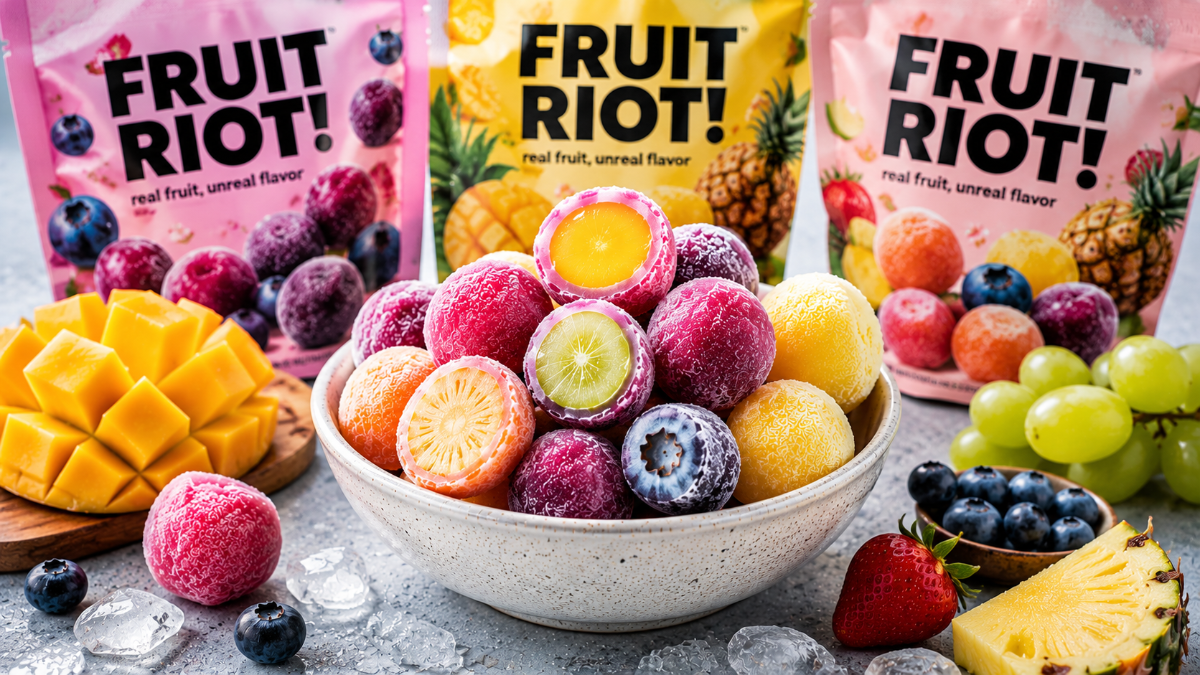
If you’ve scrolled past a video of someone biting into a frosty, neon-colored grape and wondered what it actually is, you’ve probably stumbled onto Fruit Riot. It’s not a filter trick or a food-styling gimmick-it’s a real product sold in grocery freezers. Fruit Riot’s products combine frozen whole fruit with a candy coating, a genuinely unusual pairing for the snack aisle.
Here’s a breakdown of what it is, what’s in it, how the flavors stack up nutritionally, and what to check before you buy a bag.
1. It Starts With Real Fruit, Not Fruit Flavor
Many fruit-flavored candies rely primarily on sweeteners, acids, and flavorings rather than whole pieces of fruit. Fruit Riot takes a different approach: a piece of grape, mango, pineapple, cherry, or blueberry is frozen first, then dipped in a flavored coating layer afterward. The fruit is the foundation, the candy shell is the addition, not the other way around.
That distinction matters for taste and texture. Because there’s real frozen fruit underneath, biting into a piece gives you a crisp or tangy shell followed by a cold, juicy center-something a bag of ordinary gummy candy can’t replicate.
2. Who Actually Makes It
Beyond Better Foods, LLC produces Fruit Riot, which the brand describes as freshly frozen fruit with a candy coating. It doesn’t offer direct online ordering because the product is frozen, but local grocery delivery may be available through services such as Instacart, DoorDash, and Gopuff. For everyday shopping, it’s a cold-chain grocery item you pick up (or have delivered) from a store rather than something shipped to your door directly from the company.
3. Fruit Riot Flavors: Sour, Crunchy, Spicy and Sweet
Fruit Riot’s current U.S. grocery assortment can be grouped into four main flavor and texture profiles, plus a set of collaboration products that rotate in and out of retailer listings separately.
Sour (acid-forward coating for intense tartness):
- Sour Grapes Mix
- Sour Mango Mix
- Sour Pineapple Mix
Crunchy (brittle, crisp shell with less acidity):
- Crunchy Candy Grapes Mix
- Crunchy Candy Mango
- Crunchy Candy Blueberries
Spicy (heat-forward coating layered over citrus):
- Spicy Mango Chili Lime
Sweet/Tropical (milder coating without strong sourness):
- Pineapple Tropical Mix
Also Read: Bonefish Grill
That gives eight products across these four profiles. Retailers also carry collaboration products, including an Olipop-inspired Vintage Cola Cherries, a Sour Patch Kids-branded pineapple, and a SunnyD-branded mango-flavors that don’t always show up in the same store section as the core assortment above, so it’s worth checking a retailer’s full frozen snack listing rather than just its main Fruit Riot page.
4. What’s Actually in the Bag
Peel back the marketing and the ingredient panel tells a fairly consistent story across flavors: fruit, a sugar-and-acid coating, and coconut oil in the coating. A Sour Grapes label, for example, lists grapes alongside a coating built from sugar, citric acid, malic acid, lemon juice, modified food starch, natural flavors, maltodextrin, and small amounts of fruit juice, spirulina, and turmeric used for color.
Not every flavor matches that exact list-a Crunchy Candy Mango coating swaps out some of those acids and colorants for its own combination, and similarly named products from different retailers can show slightly different formulations. For a specific allergen or ingredient concern, check the label on the exact product you plan to buy.
Two things worth flagging directly: the coating uses coconut oil, and several listings warn about possible cross-contact with peanuts and tree nuts during manufacturing.
5. The Nutrition Numbers, Side by Side
Here’s where the “healthy candy” framing needs a reality check. Below are four current Fruit Riot flavors with product-specific nutrition data, per 28-gram serving:
| Flavor | Calories | Total Carbs | Sugar | Added Sugar | Fiber |
| Sour Grapes | 45 | 8g | 7g | 3g | 0g |
| Sour Mango Mix | 50 | 7g | 6g | 3g | 0g |
| Sour Pineapple Mix | 40 | 7g | 5g | 3g | 0g |
| Crunchy Candy Mango | 50 | 8g | 7g | 4g | 0g |
All four flavors carry added sugar and 0g of fiber. That means these particular coated-fruit products shouldn’t be treated nutritionally like plain fruit, even though whole fruit remains the base ingredient. For context, Fruit Riot Sour Grapes has fewer calories and less sugar than a proportionally scaled Sour Patch Kids serving (45 calories and 7g sugar versus roughly 103 calories and 18g sugar per 28g), while plain frozen grapes at the same weight come in under 20 calories with a small amount of natural fiber and zero added sugar. In that specific comparison, Fruit Riot comes out ahead of the gummy candy on both counts-but it still contains added sugar and shouldn’t be treated as equivalent to plain fruit.
6. Pricing and Where to Actually Find It
| Where you shop | Typical price | Pack size | What to know |
| US grocery (Target, Kroger, Whole Foods, Giant) | Commonly $5.99–$7.99, depending on retailer, location, and promotions | 8 oz | Also deliverable through Instacart, DoorDash, Gopuff |
| Canada (select retailers) | Varies | 8 oz | Brand has flagged demand exceeding supply, call before visiting |
| UK (Tesco exclusive) | £5.95 | 200g | Tesco currently lists three varieties, online stock has sold out fast after restocks |
Because the UK pack size (200g) doesn’t match the US size (8 oz, about 227g), don’t compare prices across markets without converting units first-a quick per-gram calculation will tell you more than the sticker price alone.
Read More: Smith Machine
7. Common Concerns Before You Buy
Fruit Riot’s UK packaging includes a direct warning that young children have limited chewing ability and can choke on fruit pieces, and that the coating may cause temporary mouth irritation for sensitive eaters. This is manufacturer safety language, not medical guidance-treat it as a reason to supervise young kids closely rather than a reason to avoid the product outright for older children and adults.
The product is meant to stay frozen. You can eat it straight from the freezer, or let a piece sit for roughly 5–10 minutes if you prefer a softer bite-but once it’s fully thawed, refreezing it turns the fruit mushy rather than restoring the original texture.
Some flavors carry vegan and gluten-free labeling, and at least one core flavor is marked kosher-but none of these claims should be assumed to apply brand-wide. Check the specific bag, especially if you’re shopping for someone with a dietary restriction.
Is It Actually Worth the Hype?
Fruit Riot delivers on its core promise: it’s genuinely fruit, and it’s genuinely coated in candy, offering a distinctive combination of frozen whole fruit and candy coating that’s uncommon in the snack aisle. Whether that’s worth the price depends on what you’re comparing it to. Against Sour Patch Kids, Fruit Riot Sour Grapes come out lower in calories and sugar, against a bag of plain frozen grapes, it loses on both fronts. If you’re buying it for the novelty and the flavor experience rather than as a health food swap, it delivers exactly what it promises.
Frequently Asked Questions
Is Fruit Riot the same thing as freeze-dried candy?
No. Freeze-dried candy is dehydrated to create a dry, airy or crunchy texture, while Fruit Riot starts with whole frozen fruit and adds a candy coating.
Why does Fruit Riot feel more like candy than a fruit snack when you eat it?
The candy coating provides the first strong flavor impression, while the frozen fruit contributes the cold, firm texture underneath. That’s a deliberate flavor-laying choice, but it also explains why the eating experience feels closer to candy than to a fruit cup, even though fruit makes up the base of the product.
Does the fruit inside Fruit Riot taste different from eating that fruit plain?
Yes. Freezing makes fruit such as grapes and mango firmer and changes its texture compared with fresh fruit. The candy coating also adds a strong flavor that can overshadow the fruit itself.
Can Fruit Riot go in a lunchbox or stay unfrozen for a few hours?
It’s not designed for extended time outside the freezer. A few minutes at room temperature softens the texture intentionally, but several hours will fully thaw it, and the product isn’t meant to be refrozen afterward. For the best texture, keep it frozen until you’re ready to eat it.
Is there a version of Fruit Riot without added sugar?
The Fruit Riot products reviewed for this guide contain added sugar in their candy coatings. If you need to avoid added sugar, check the ingredient and nutrition panel for the specific product.
How is Fruit Riot different from chocolate-covered frozen fruit?
Chocolate-covered frozen fruit (like frozen chocolate-dipped bananas) uses a fat-based chocolate coating rather than a sugar-and-acid candy shell, which produces a smoother, richer texture rather than a crisp or tart one. Fruit Riot’s coating is built more like hard candy, prioritizing snap and sourness over the meltiness associated with chocolate.
What happens if you eat Fruit Riot after it’s fully melted?
Once fully thawed, its texture changes noticeably-the fruit softens and can turn mushy, and it loses the contrast between coating and fruit that defines the eating experience. The brand advises keeping it frozen and says it won’t refreeze properly after thawing. If the product has been left unrefrigerated for an extended period, follow normal food-safety guidance for thawed produce rather than assuming it’s automatically fine to eat.
Which Fruit Riot flavor is the most sour?
Sour varieties, including Sour Grapes, Sour Mango, and Sour Pineapple, are built around acid-forward coatings designed specifically for tartness, while the Crunchy and Sweet/Tropical varieties emphasize texture or mild sweetness instead. Among the sour options, exact tartness can vary slightly by batch and fruit type, but all three are formulated to lead with sourness rather than sweetness.
Are Fruit Riot products made in a facility that also handles nuts?
Some listings for Fruit Riot products note that they’re made in facilities that also process peanuts and tree nuts, meaning cross-contact is possible even though nuts aren’t a listed ingredient. Anyone with a nut allergy should treat this as a real consideration and check the specific product’s allergen statement before eating it.
Is Fruit Riot suitable for vegetarians?
The core ingredients-fruit, sugar-and-acid coating, and coconut oil-don’t rely on gelatin or other animal-derived thickeners commonly found in gummy candy, and at least one flavor is separately labeled vegan. Formulations vary by flavor, though, so checking the specific ingredient panel is still the most reliable way to confirm a product meets a vegetarian or vegan diet.
