
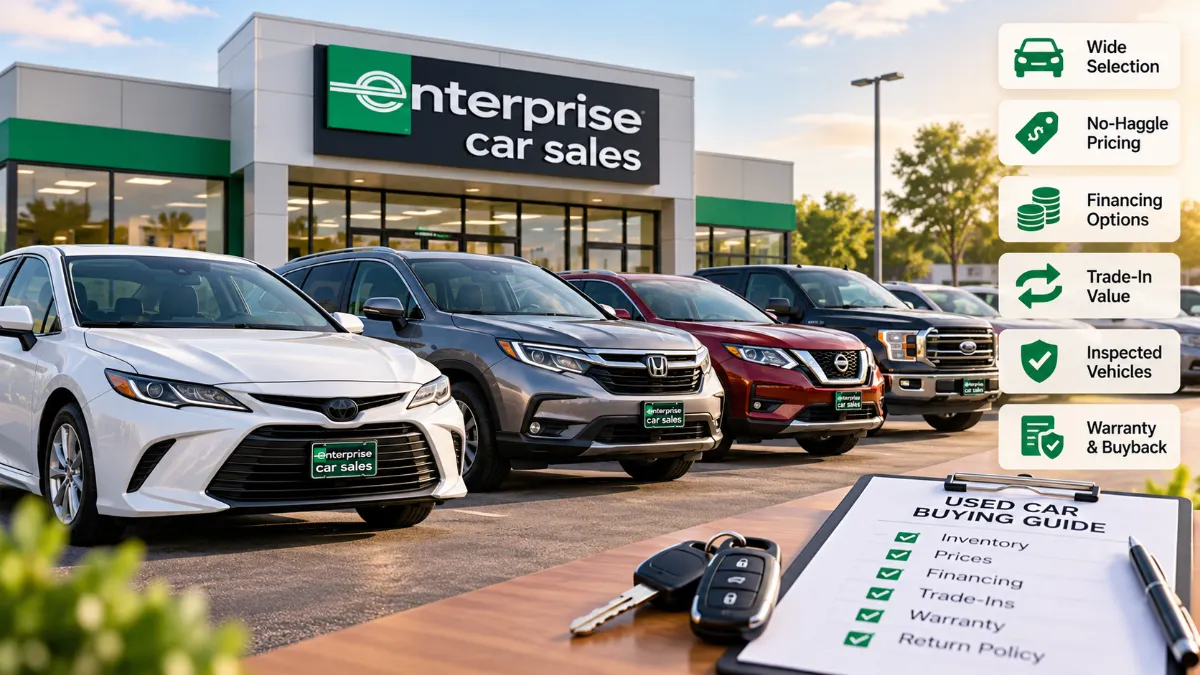
Enterprise Car Sales is a US used-car retailer affiliated with Enterprise Rent-A-Car. It sells used cars, SUVs, trucks, and vans through dealerships and an online inventory. Shoppers can compare no-haggle prices, explore financing, estimate trade-in values, and schedule test drives. Vehicles also come with inspections, limited warranty coverage, and a seven-day buyback program, subject to specific conditions.
If you’re considering buying from Enterprise, the best place to start is its online inventory. You can compare vehicles, find a dealership by ZIP code or state, and check what’s available near you. Before making a decision, look beyond the advertised price. Vehicle history, condition, financing costs, and warranty terms all affect whether you’re getting a good deal.
What Is Enterprise Car Sales?
Enterprise Car Sales is the used-vehicle retail division of the Enterprise family. While Enterprise Rent-A-Car focuses on temporary vehicle rentals, Enterprise Car Sales sells used vehicles to customers looking to purchase a car outright or through financing.
Many of its vehicles previously belonged to Enterprise’s rental fleet. Others come from affiliated leasing operations, trade-ins, auctions, or other sources, so not every vehicle was used as a rental.
The company operates used-car dealerships across the United States, combining online shopping with in-person assistance. Customers can research vehicles from home, contact a sales consultant, and visit a dealership when they’re ready to take a closer look.
How to Search Enterprise Car Sales Inventory and Locations
Enterprise Car Sales offers a changing selection of makes, models, body styles, and price ranges. What you’ll find depends on local availability, and individual listings can disappear as vehicles are sold.
Start by browsing the Enterprise Car Sales inventory. You can narrow the results using filters such as:
- Vehicle type: Sedans, SUVs, crossovers, trucks, minivans, and cargo vans.
- Price range: Vehicles that fit your spending limit.
- Make and model: Specific manufacturers or models you’re interested in.
- Year and mileage: Preferred model years and mileage ranges.
- Fuel type and economy: Available fuel types and fuel-efficiency preferences.
- Features: Equipment, technology, and convenience features available on individual vehicles.
Each listing provides details to help you compare vehicles, including specifications, mileage, and advertised prices. Once you’ve found something promising, contact the dealership to confirm availability before scheduling a test drive.
Finding Enterprise Car Sales Locations
You can use the official Enterprise Car Sales dealership locator to search by ZIP code or state. This makes it easier to identify nearby dealerships and explore their available vehicles.
Inventory differs from one location to another. If the vehicle you want is at a different dealership, a transfer may be possible. Ask about availability, transfer fees, and any conditions before making arrangements.
Enterprise Car Sales Pricing and Vehicle Quality
How No-Haggle Pricing Works
Enterprise Car Sales uses no-haggle pricing, meaning the advertised vehicle price is generally fixed rather than negotiated through the traditional back-and-forth dealership process.
For shoppers who dislike negotiating, this can make comparing vehicles easier. You know the asking price upfront and can focus on whether the vehicle meets your needs and budget.
That doesn’t necessarily mean Enterprise has the lowest price. Another dealership might offer a comparable vehicle for less, particularly when differences in mileage, condition, and equipment are considered.
It’s also important to separate the advertised price from the final amount you’ll pay. Sales tax, registration, title charges, applicable dealership fees, vehicle transfers, and financing costs can affect the overall expense.
Before committing, request a written out-the-door price and compare it with quotes for similar vehicles. That gives you a clearer picture of the actual cost than advertised prices alone.
Enterprise Certified Vehicles and Inspection Standards
Enterprise sells vehicles through its Enterprise Certified program. According to its published vehicle inspection standards, vehicles must pass an inspection performed by technicians certified by the National Institute for Automotive Service Excellence (ASE).
The company also provides complimentary third-party vehicle history reports, which can help buyers review available information about a vehicle’s previous ownership and reported incidents.
Still, certification isn’t a promise that a car will remain problem-free. Enterprise Certified is also not the same as a manufacturer-backed certified pre-owned program, which may have different inspection requirements and warranty coverage.
Before buying, review whatever maintenance records are available, look for signs of previous damage, and examine the vehicle’s overall condition. An independent mechanical inspection can uncover problems that aren’t apparent during a short test drive.
Are Former Rental Cars Worth Buying?
A former rental car can be worth considering, particularly when its price, condition, and maintenance history compare favorably with other used vehicles.
Rental fleets generally follow scheduled maintenance programs, but individual vehicles may have been driven by numerous people under different conditions. That makes it important to examine the history and condition of the specific car rather than assuming every former rental has been treated the same way.
Neither a rental history nor dealer certification tells the whole story. Mileage, maintenance documentation, accident reports, mechanical condition, and inspection findings should carry more weight in your decision.
Enterprise Car Sales Financing, Trade-Ins, and Buying Process
Enterprise Car Sales financing options allow eligible buyers to apply for auto loans through participating lenders. Shoppers can estimate monthly payments and discuss financing arrangements with a sales consultant before purchasing.
Your actual interest rate, loan approval, and monthly payment will depend on factors such as credit history, down payment, loan amount, and repayment term.
The online car-buying process also lets customers explore vehicles, begin financing applications, and request trade-in estimates before visiting a dealership.
A practical buying process involves five steps:
- Search available inventory: Find vehicles that suit your budget, preferences, and everyday driving needs.
- Review the vehicle: Examine its mileage, equipment, history report, and inspection information.
- Arrange a test drive: Visit the dealership and see how the vehicle handles, feels, and performs.
- Explore financing and trade-ins: Compare available loan terms and request an estimate for your current vehicle if you plan to trade it in.
- Complete the purchase: Carefully review the final price, financing agreement, warranty documents, and other terms before signing.
You can begin much of the shopping process online, although completing the transaction may involve working with a dealership. Delivery may also be available in certain areas, so confirm the options for your location.
It’s worth comparing Enterprise’s financing offer with quotes from banks or credit unions. Even a modest difference in the annual percentage rate can change how much you pay over the life of the loan.
Enterprise Car Sales Warranty and Return Policy
Enterprise includes several buyer protections with its vehicles. These benefits are useful to understand before purchasing, especially because warranty coverage and the buyback program come with specific limitations.
| Buyer protection | Published terms |
| Limited powertrain warranty | 12 months or 12,000 miles, whichever comes first |
| Roadside assistance | 12 months with unlimited mileage, subject to limitations |
| Buyback program | Seven days or 1,000 additional miles, whichever comes first |
| Buyback restocking fee | $200 where permitted by law |
The limited powertrain warranty starts on the purchase date and runs concurrently with any remaining manufacturer’s warranty. It covers specified powertrain components rather than every possible mechanical or electrical problem.
Enterprise’s seven-day buyback program gives qualifying customers the option to return their vehicle within seven days of purchase or before driving an additional 1,000 miles, whichever comes first. Under the published terms, the vehicle can be returned for its original purchase price minus a $200 restocking fee where permitted by law. Restrictions apply.
Before signing, review the written warranty, return eligibility requirements, exclusions, and any fees that might apply. Enterprise also offers optional protection products at an additional cost. You can examine its published vehicle protection coverage to understand what’s included and what requires a separate purchase.
Is Enterprise Car Sales Worth It?
Enterprise Car Sales is worth considering if you prefer fixed advertised prices, a broad selection of used vehicles, and the convenience of arranging financing and trade-ins through the same retailer.
Its vehicle inspections, complimentary history reports, and included buyer protections provide useful information and safeguards during the buying process. For someone who wants a more structured dealership experience, those features may be appealing.
There are trade-offs, though. You generally can’t negotiate the advertised vehicle price, a former rental car still needs careful evaluation, and the limited powertrain warranty won’t cover every repair. The important question is whether a particular vehicle offers good value compared with other options.
Before deciding, compare the following:
- Total cost: Request an out-the-door quote and compare it with similar vehicles at competing dealerships.
- Vehicle condition: Review mileage, maintenance records, and findings from an independent inspection.
- Financing: Compare annual percentage rates, loan terms, and total borrowing costs.
- Warranty protection: Check which components are covered and which expenses remain your responsibility.
- Return conditions: Understand the buyback deadline, mileage limit, applicable fee, and restrictions.
Ultimately, the right choice depends on the vehicle itself, not just the dealership selling it. Browse the available inventory, compare prices in your area, and take the time to inspect the car and review the purchase agreement. Those checks will help you decide whether Enterprise Car Sales is the right option for your next vehicle.
Frequently Asked Questions
Are Enterprise Car Sales vehicles former rental cars?
Many vehicles sold through Enterprise Car Sales previously belonged to Enterprise’s rental fleet. However, some come from leasing operations, trade-ins, and other sources. Check the individual vehicle history report to learn more about its previous use before purchasing.
Can you negotiate prices at Enterprise Car Sales?
Enterprise Car Sales follows a no-haggle pricing policy, meaning advertised vehicle prices are generally fixed. Although traditional price negotiation isn’t part of its sales approach, buyers should still compare similar vehicles and request a complete out-the-door price that includes applicable taxes and fees.
Does Enterprise Car Sales offer financing for used cars?
Yes, Enterprise Car Sales offers financing through participating lenders for eligible buyers. Loan approval, interest rates, down payments, and repayment terms depend on individual financial circumstances. Comparing offers from banks and credit unions can help you find competitive financing.
