
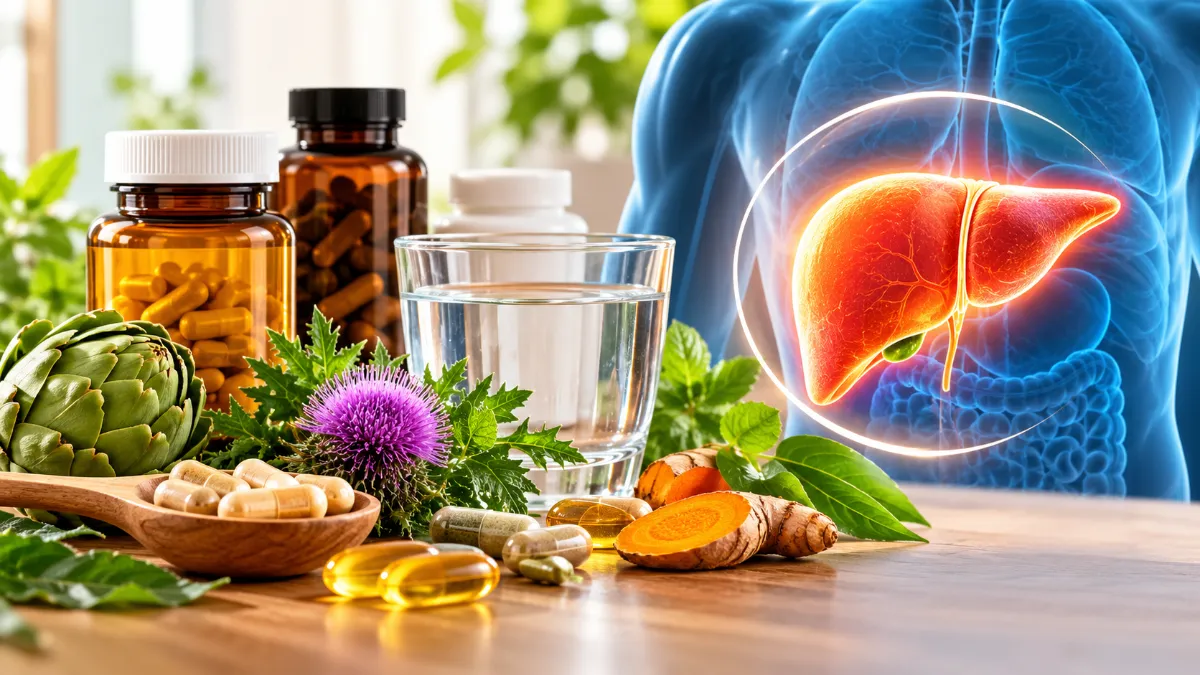
The right dose for your liver depends on the specific supplement or medication, its ingredients, strength, and your health needs. There is no universal dosage that is safe or effective for everyone. Before taking a liver-support product, identify its exact name, read the recommended directions, and check whether its ingredients could interact with medications or affect an existing medical condition.
If you’re unsure how much to take, start with the product’s Supplement Facts label or official medication instructions. Pay attention to serving size, ingredient amounts, and warnings. A manufacturer’s suggested serving is not automatically the safest choice for every person, particularly someone with liver disease or other health concerns.
What Does “Dose for Your Liver” Mean?
The phrase “dose for your liver” generally refers to how much of a product someone should take to support liver health or manage a liver-related condition. However, the appropriate dosage depends on what the product actually contains.
Liver-related products generally fall into three categories:
- Dietary supplements: Products containing herbs, vitamins, minerals, or other ingredients marketed for liver support.
- Prescription medications: Treatments prescribed for specific liver or bile duct conditions, with dosing determined by the diagnosis and medication.
- Over-the-counter products: Medicines or supplements available without a prescription that may carry liver-related precautions.
These products are not interchangeable. A supplement marketed for general wellness cannot be assumed to treat liver disease, and prescription medication instructions should never be replaced with supplement recommendations.
Identifying the product, its active ingredients, and its intended purpose is essential before choosing a dose for your liver.
How to Find the Recommended Liver Supplement Dose
The most practical way to check liver supplement dosage is to read the product label carefully. In the United States, dietary supplements have a Supplement Facts panel that identifies serving size and dietary ingredient amounts. Suggested-use directions and warnings should be checked separately elsewhere on the packaging.
Look for the following information:
| Label information | What it tells you |
| Serving size | Number of capsules, tablets, or measured quantities in one serving |
| Amount per serving | Quantity of each listed dietary ingredient in that serving |
| Suggested use | Manufacturer’s recommended amount and frequency |
| Warnings | Important precautions and potential interactions |
| Other ingredients | Additional components such as fillers or capsule materials |
Always distinguish the manufacturer’s suggested serving from a medically established safe dose. Product labels provide useful information, but they do not guarantee that a supplement is appropriate for your individual health situation.
Serving Size vs. Active Ingredient Amount
Serving size refers to the quantity of the product represented by one labeled serving. The amount of an ingredient tells you how much of that substance is contained within that serving.
For example, a hypothetical supplement might list two capsules as its serving size and 300 mg of a botanical extract per serving. That means the two capsules together provide 300 mg of the listed extract, not necessarily 300 mg per capsule.
This example explains label interpretation; it is not a dosage recommendation.
Botanical extracts may also differ in concentration and standardization. Two products listing the same herb can contain different amounts of its constituent compounds.
Understanding Supplement Facts label requirements helps prevent confusion when comparing products.
What Affects a Safe Liver Supplement Dosage?
The appropriate dose for your liver is influenced by more than the instructions printed on a bottle. Personal health factors may change whether a supplement is suitable at all.
Age and individual health: Children, older adults, and people with underlying medical conditions may need additional precautions. A product intended for adults should not automatically be given to children.
Existing liver conditions: Hepatitis, cirrhosis, fatty liver disease, and other liver conditions require individualized medical assessment. Certain supplements can worsen liver injury or interfere with treatment.
Other medications: Prescription drugs, nonprescription medicines, and herbal ingredients can interact. These interactions may change medication effects or increase the likelihood of adverse reactions.
Pregnancy and breastfeeding: Safety information for many herbal supplements is limited. Professional guidance is important before using products containing ingredients with uncertain effects.
Multiple supplements: Taking several products with overlapping ingredients can increase total exposure without making the combined intake obvious.
Anyone managing a liver condition should discuss dietary supplement and medication interactions with a qualified healthcare professional before starting a new product.
Can Liver Supplements Cause Side Effects or Liver Damage?
Yes. Some products advertised for liver health can cause side effects, interact with medications, or contribute to liver injury. Marketing terms such as “natural” and “herbal” do not establish that a product is harmless.
Potential problems include digestive discomfort, allergic reactions, adverse ingredient interactions, and liver toxicity associated with certain substances.
Risk can increase when someone combines several supplements, uses concentrated extracts, or takes more than the labeled amount. Even following suggested directions does not eliminate every risk, particularly for people with existing liver disease.
Possible warning signs of liver injury include yellowing of the skin or eyes, dark urine, unusual fatigue, persistent nausea, and abdominal discomfort. These symptoms can have several causes and require medical evaluation rather than self-diagnosis.
If such symptoms appear while taking a supplement, stop using the suspected product and seek prompt medical advice. Severe or rapidly worsening symptoms require urgent evaluation. Do not stop prescribed medication without professional guidance unless emergency medical personnel instruct you otherwise.
Your dose for your liver should account for the actual ingredient, the quantity consumed, and your medical circumstances—not simply the product’s advertised benefits.
Are Liver Detox Dosage Claims Reliable?
Many supplements are advertised as products that cleanse, detoxify, or restore the liver. However, broad claims about removing toxins or repairing liver damage often lack convincing clinical evidence.
The liver naturally processes numerous substances, including nutrients, medications, and metabolic waste products. That biological function does not establish that commercially marketed detox supplements improve liver function.
A product’s recommended liver detox supplement dosage may reflect the manufacturer’s suggested use rather than an amount proven effective in clinical trials.
Evidence varies among ingredients. Research involving one standardized extract cannot automatically support claims about another formulation or a combination product.
Consumers should evaluate liver detox supplement safety independently of promotional promises. Be especially cautious when a product claims to cure liver disease, reverse established damage, or produce guaranteed results.
A larger dose does not necessarily provide greater benefits and may introduce additional risks.
What Should You Check Before Taking a Liver Supplement?
Before choosing a dose for your liver, confirm that the product is clearly identified and that its ingredients match its advertised purpose.
Check the manufacturer’s directions, serving size, ingredient quantities, and warnings. If the supplement contains multiple herbs or vitamins, review the complete formula rather than focusing on the primary advertised ingredient.
Compare its contents with any other supplements you already take to identify potentially overlapping ingredients.
For medications, follow the instructions issued by your prescribing clinician or pharmacist. Do not substitute dietary supplement directions for prescription dosing.
If you have liver disease, take regular medications, or are uncertain about an ingredient, request a professional review before beginning the supplement.
Reliable liver health supplement instructions explain how a product is intended to be used without promising that the same quantity is safe or effective for everyone.
When the product’s identity, ingredient amounts, or safety remain unclear, avoid guessing. A healthcare professional can help determine whether the product is appropriate and whether an evidence-based dosage recommendation exists.
Frequently Asked Question
What is the recommended dose for your liver?
There is no universal recommended dose for every liver-support product. The appropriate amount depends on the specific supplement or medication, its ingredients, and individual health factors. Check the product instructions and consult a healthcare professional when necessary.
How many liver supplement capsules should I take daily?
The number depends on the particular product and its serving size. Different formulations contain different ingredient concentrations. Read the manufacturer’s directions and avoid increasing the amount without appropriate medical guidance.
Is serving size the same as ingredient dosage?
No. Serving size identifies the quantity of product in one serving, while ingredient amounts describe the substances contained in that serving. Both details are necessary to understand the label correctly.
Can I take liver supplements every day?
Daily use is not automatically safe or necessary. Safety depends on the ingredients, duration of use, existing medical conditions, and possible interactions. Ask a healthcare professional before long-term use, especially if you have liver disease.
Can taking too much liver supplement damage my liver?
Yes. Excessive intake of certain supplements can contribute to liver injury or other adverse effects. Some ingredients may also cause problems at labeled amounts in susceptible individuals.
Are liver detox supplements FDA-approved?
In the United States, dietary supplements are not approved for safety and effectiveness before marketing in the way new drugs generally are. A product’s availability does not establish that its detoxification claims are scientifically proven.
Can liver supplements interact with prescription medications?
Yes. Certain herbal ingredients and other dietary supplements can alter medication effects or increase adverse reactions. A pharmacist or healthcare professional can help assess potential interactions involving your specific products.
Should people with liver disease take liver supplements?
People with diagnosed liver disease should consult their treating clinician before using liver-support supplements. Some products may be inappropriate, interfere with treatment, or worsen existing liver problems.
