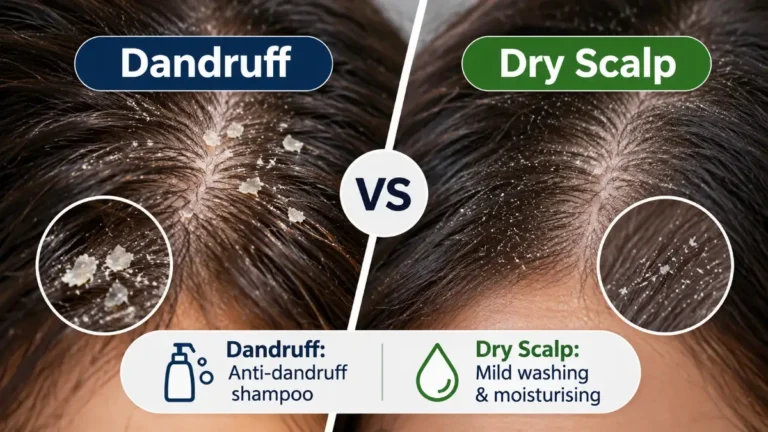
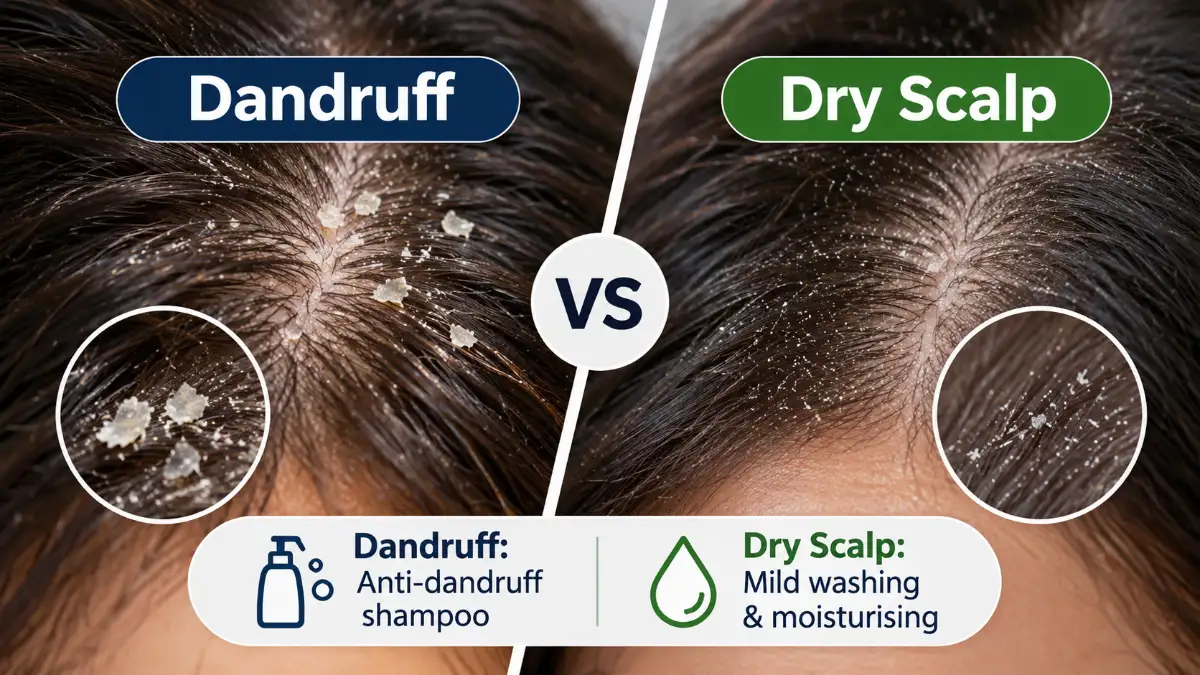
Whilst both can result in an itchy, flaky scalp, dandruff is frequently linked to a skin condition, seborrheic dermatitis, which involves scalp oils, Malassezia yeast, and a skin reaction. Dry scalp results from a lack of skin hydration. Although the two often share features, they often require different treatments. Anti-Dandruff Medicated shampoos can be used to manage dandruff. Conversely, a dry scalp is often successfully treated by reducing the aggressiveness of washing and by applying moisturisers.
Although there are common similarities, observations can be made about someone’s dandruff and/or dry scalp, together with any additional skin issues, to help assess the situation. Unfortunately, these observations can often be quite similar, so a professional assessment is sometimes necessary for an accurate diagnosis.
Dandruff vs Dry Scalp: Key Differences
Despite similarities, particularly where itch and flaking predominate, it is useful to recognise distinctions between dandruff and dry scalp to help determine the most suitable course of action.
| Feature | Dandruff | Dry Scalp |
| Cause | Skin oils, Malassezia yeast,t and skin reaction | Scalp dehydration |
| Flakes | Often white or light yellow and can be oily | Usually small and appear dry |
| Skin | Often oily and may become inflamed (especially if seborrhoeic dermatitis is present) | Frequently dry and/or taut |
| Itch | Common | Common |
| Redness/irritation | Possibly – especially where seborrhoeic dermatitis is present | Possibly – in particular if skin is irritated |
| Common causes | Stress, Seasonal variation, and skin-related issues | Low temperatures, Low humidity, Aggressive hair shampoos |
| Treatment | Anti-dandruff shampoo | Mild washing and moisturising |
Note: Not everyone with dandruff will necessarily experience greasy hair,r and not all people with dry scalp will necessarily have small flakes. As outlined in the American Academy of Dermatology information on dry scalp issues, the similarity of features can result in difficulties in assessing the exact nature of someone’s scalp issue, and a professional assessment is often recommended.
Read more: What is an Internal Medicine Doctor Doing? 9 Things Patients Should Know
How to Tell if You Have Dandruff or Dry Scalp
As well as examining the flakes on your scalp, consider how your scalp feels and when your symptoms occur.
An oily scalp, continual flaking and/or localised flaky areas can all suggest dandruff. People can also suffer from flaky areas on their eyebrows, ears and/or nose. Such features can indicate seborrhoeic dermatitis, which predominantly affects oily regions of the skin.
Indicators that you may be experiencing dry scalp include a taut or uncomfortable-feeling scalp, particularly post-washing. Alongside your scalp, you may also find your face, hands and/or other body areas are dry. Further evidence of dry scalp can be flaking that is exacerbated in winter and/or following the application of an aggressive shampoo.
Unfortunately, neither the colour of flakes nor scalp oiliness can be used with certainty to differentiate between dandruff and dry scalp. Both can result in white, itchy flakes. Furthermore, eczema, psoriasis, and even hair product allergy can all generate comparable symptoms.
What Causes Dandruff and Dry Scalp?
Causes of Dandruff
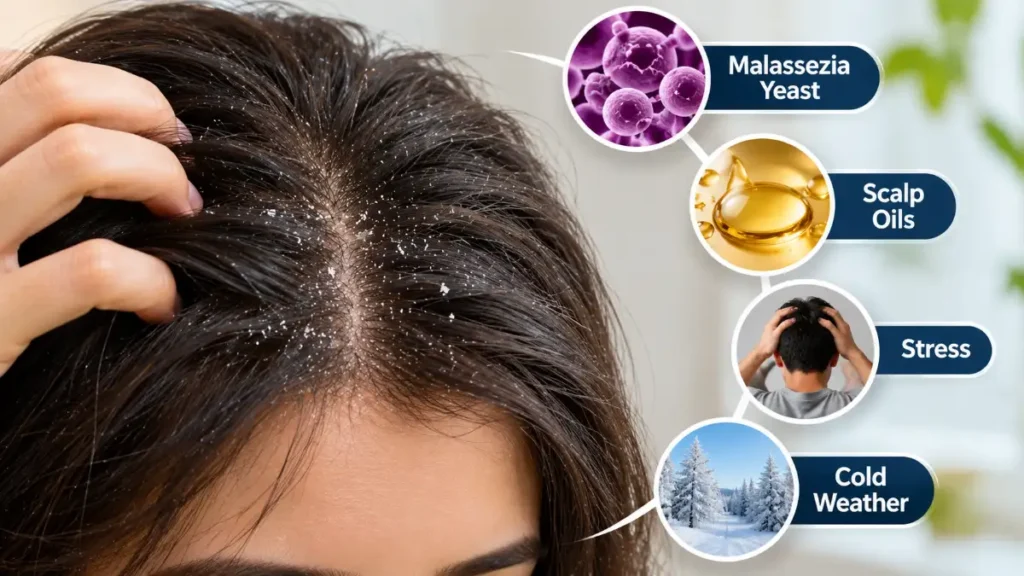
Generally, dandruff is regarded as a mild variant of seborrhoeic dermatitis. It arises from a combination of skin oils, Malassezia yeast, and skin reaction.
Whilst Malassezia is typically present on human skin and does not itself pose a problem, for some people, the interaction between this yeast and skin oils can play a part in encouraging skin cell turnover and causing skin irritation.
In addition, stress and reduced temperature can exacerbate dandruff for some. Poor personal hygiene is not a root cause of dandruff, but infrequent shampooing can enable skin oils and flakes to accumulate.
Further information on seborrhoeic dermatitis is available in the clinical summary,y and this outlines how it can impact the scalp and other oily regions of the body.
Causes of Dry Scalp
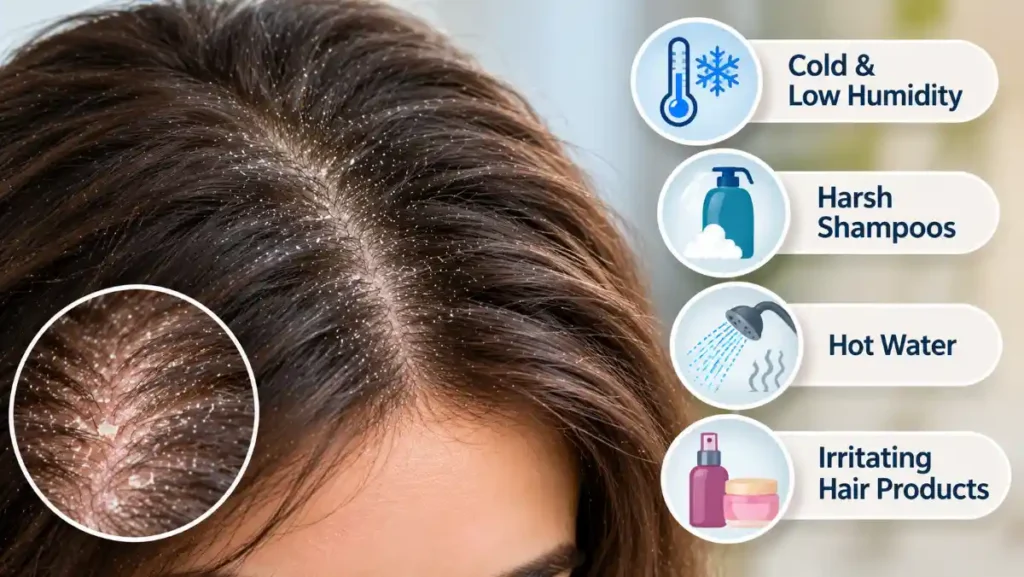
A dry scalp forms when the skin is unable to sufficiently maintain hydration. Various lifestyle and environmental elements can worsen this:
- Low temperatures and low levels of indoor humidity.
- Regular washing of hair with aggressive shampoos.
- Hot water, which can remove skin oils.
- Hair products that are either irritating or drying to the skin.
Furthermore, dryness can be linked to an underlying skin issue. As highlighted in the Cleveland Clinic information on dry scalps, treatment will depend on the root of the issue. Consequently, ongoing flaking should not always be assumed to stem solely from a dry scalp.
Dandruff vs Dry Scalp: Treatment Options
Understanding likely reasons for someone’s scalp issues is key to deciding on the most appropriate treatment. Anti-dandruff shampoo may not be effective or could even aggravate skin irritation if applied to a merely dry scalp. Similarly, moisturisers may not be sufficient to effectively manage dandruff.
Best Shampoo and Treatment for Dandruff
Often, medicated shampoos are recommended as a method of managing mild dandruff. The most beneficial active ingredient within a shampoo will depend on an individual’s symptoms and skin reaction.
- Ketoconazole – has fungicidal properties and so can be used to manage Malassezia yeast.
- Selenium sulfide – also has fungicidal properties and can assist in managing dandruff and flaking.
- Salicylic acid – aids removal of accumulated scalp flaking. Nevertheless, it can induce dryness in some individuals.
Select a shampoo that is appropriate for your hair type. Always adhere to the manufacturer’s advice. Certain shampoos require a period of time to be left on the scalp prior to being rinsed off. The required frequency of shampooing will depend upon the product.
Whilst shampooing, concentrate on your scalp. If you have curly, coily or chemically treated hair, then you may wish to shampoo less often to avoid over-drying.
Additional information on common shampoo actives and how hair type can influence treatment can be found in the American Academy of Dermatology advice on dandruff management.
How to Manage a Dry Scalp
If your flaking is due to dryness,s then alterations can be made to your washing practice.
Use a mild, non-medicinal shampoo. Wash your hair with water at a warm temperature rather than hot. And if you find that your scalp feels taut post-washing, then perhaps reduce the number of times that you wash your hair – continuing to ensure that you are adequately cleansing it and that your scalp feels comfortable.
Applying a fragrance-free scalp-specific moisturiser may also be of assistance. Avoid products that result in a stinging, more itchy or irritated feeling on your skin.
If the air in your house is especially dry, then the use of a humidifier could be of benefit during the winter months.
Whilst these measures can effectively address straightforward dryness, they may not be sufficient for more complex issues such as psoriasis and/or eczema. Should your flaking continue despite implementing new washing and moisturising practices,s then it may be necessary to explore alternative potential causes.
When Should You Consult a Dermatologist?
Usually, mild dandruff and/or dry scalp can often be successfully managed through suitable self-care. However, there are scenarios where medical advice should be sought in addition to, or instead of, trying a different shampoo.
Seek medical advice promptly if your scalp is markedly puffy, sore, re or red. Also consult a professional if you are experiencing unexpected hair loss.
If after approximately four weeks of properly using an appropriate anti-dandruff shampoo, your dandruff has not improved, then it would be advisable to discuss this with a healthcare practitioner. Likewise, if your dry scalp continues to be problematic despite attempting mild management techniques, then professional assessment is warranted.
Information from the NHS on dandruff highlights when further investigation is necessary and also describes other conditions which can result in scalp flaking.
Scalp psoriasis can, for instance, create more substantial and long-lasting patches. Severe itchiness and skin irritation can arise from eczema and/or contact dermatitis. Specific fungal infections canalso, give rise to flaking and hair loss.
Whilst these conditions can closely mirror typical dandruff and/or dry scalp issues, they may require distinct lines of treatment.
Frequently Asked Questions
Can You Have Dandruff and Dry Scalp at the Same Time?
Yes. You can have dandruff while also experiencing moisture loss or irritation. Cold weather, harsh hair products, or frequent use of medicated shampoos may leave your scalp feeling dry even when dandruff is present. In that situation, you may need to manage the dandruff while adjusting your washing routine to prevent additional dryness.
How Can I Tell If I Have Dandruff or Dry Scalp?
Dandruff often causes recurring white or yellowish flakes and may be accompanied by an oily or irritated scalp. Dry scalp typically causes fine flakes, tightness, and dryness, especially after washing. However, symptoms can overlap, so appearance alone cannot confirm which condition you have.
What Is the Main Difference Between Dandruff and Dry Scalp?
The main difference is the underlying cause. Dandruff is commonly associated with seborrheic dermatitis, scalp oils, and Malassezia yeast. Dry scalp occurs when the skin loses too much moisture. Because the causes differ, dandruff often responds to medicated shampoos, while dry scalp may improve with gentle cleansing and moisturizing care.
What Is the Best Shampoo for Dandruff vs Dry Scalp?
For dandruff, shampoos containing ketoconazole or selenium sulfide can help control flaking. Salicylic acid shampoos may also help remove built-up scales. For dry scalp, a gentle, moisturizing shampoo without harsh cleansing ingredients or added fragrance is often a better starting point. The right choice depends on your symptoms and scalp sensitivity.
Can You Have Dandruff and Dry Scalp at the Same Time?
Yes. Dandruff and scalp dryness can occur together. Someone with dandruff may also experience dryness from cold weather, irritating hair products, or frequent medicated shampoo use. Managing both problems may require an appropriate dandruff treatment alongside gentler washing and moisturizing care.