
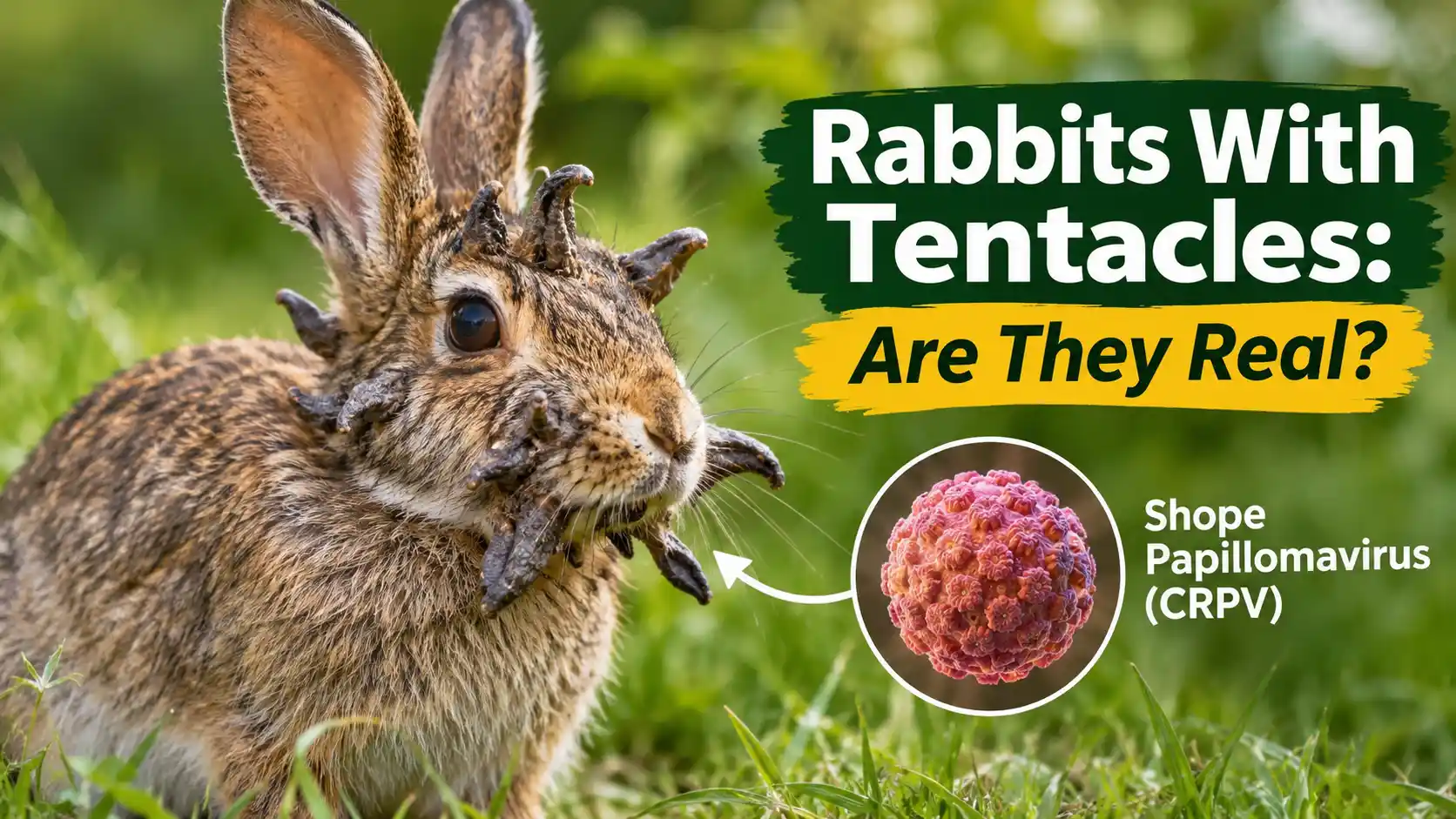
Rabbits with tentacles are real animals, but the strange growths on their heads are not actual tentacles. These horn-like or finger-shaped growths are typically caused by Shope papillomavirus, a rabbit-specific virus that produces abnormal skin growths. Although the condition can look alarming, most infected wild rabbits recover, and the virus is not known to infect humans.
The unusual appearance gained widespread attention in August 2025 when photographs of wild cottontail rabbits with dark growths around their faces circulated online. Sightings in Fort Collins, Colorado, left people wondering whether the animals were real, suffering from a mysterious disease, or digitally altered.
As explained by Colorado State University’s veterinary specialists, Shope papillomavirus is a long-recognized infection. The unusual growths are a biological condition, not evidence of a newly discovered animal.
Are Rabbits With Tentacles Real?
Yes. Wild rabbits can develop unusual growths that resemble tentacles, horns, or thick black spikes. These growths are called papillomas, which are wart-like skin lesions associated with viral infection.
They commonly appear around the head and neck, including the ears, eyelids, and nose. Some remain small, while others grow longer and become more noticeable.
Despite their appearance, these structures are not functioning body parts. They cannot move independently, grab objects, or behave like the tentacles of an octopus.
Not every unusual rabbit photograph shared online is necessarily authentic. However, the condition itself is well documented. Colorado Parks and Wildlife confirms that infected cottontails can develop black skin nodules that sometimes become elongated and horn-like.
What Causes Tentacle-Like Growths on Rabbits?
The condition is caused by cottontail rabbit papillomavirus (CRPV), also known as Shope papillomavirus.
The virus infects skin cells and triggers abnormal cell growth, producing papillomas. These growths can develop thick layers of keratin, the structural protein found in hair and nails.
As keratin builds up, the papillomas may become dark, rough, and elongated. This explains why affected rabbits sometimes appear to have horns or tentacles growing from their heads.
Scientists identified the virus in the 1930s, so it is not a newly discovered infection. The Merck Veterinary Manual’s explanation of rabbit papillomatosis describes the characteristic horny skin growths and their association with Shope papillomavirus.
Read more: What is an Internal Medicine Doctor Doing? 9 Things Patients Should Know
How Does Shope Papillomavirus Spread?
Shope papillomavirus spreads primarily through biting arthropods, including mosquitoes, fleas, and ticks. These insects can carry the virus from an infected rabbit to another susceptible rabbit.
Wild cottontails are natural hosts, but domestic rabbits can also become infected, especially when kept outdoors where biting insects are more common.
The infection is not the result of genetic mutations, radiation exposure, or the emergence of a new rabbit species.
Why Did Rabbits With Tentacles Go Viral in Colorado?
In August 2025, reports of cottontail rabbits with unusual facial growths attracted widespread attention in Fort Collins and surrounding areas of northern Colorado.
Photographs showed rabbits with dark, protruding structures around their heads and faces. Some people compared them to fictional monsters, while others wondered whether the animals had developed actual tentacles.
Local reporting on the Fort Collins rabbit sightings documented residents’ encounters and wildlife officials’ explanation that a virus was responsible.
The growths were consistent with Shope papillomavirus infection, although photographs alone cannot confirm the diagnosis of every individual rabbit.
What made the story remarkable was the animals’ appearance, not the discovery of a new disease. The virus had been recognized for nearly a century before the Colorado photographs drew widespread attention.
Is There a Connection to the Jackalope Legend?
Rabbits affected by Shope papillomavirus can resemble the mythical jackalope, a rabbit-like creature traditionally depicted with antelope horns.
Some explanations of jackalope folklore suggest that sightings of rabbits with unusual horn-like growths may have helped inspire stories about horned rabbits.
The connection has also appeared in discussions of the Colorado rabbit sightings and jackalope folklore.
Still, the exact origins of the jackalope legend remain uncertain. The resemblance is striking, but it does not prove that infected rabbits created the myth.
Are Rabbits With Tentacles Dangerous?
Rabbits affected by Shope papillomavirus are not considered dangerous to humans. The virus is specific to rabbits and is not known to infect people, dogs, or cats.
For the rabbits themselves, however, the infection can sometimes cause health problems. Much depends on how large the growths become and where they develop.
Can the Growths Harm or Kill Rabbits?
Many infected wild rabbits continue eating, moving, and behaving normally. Their papillomas may eventually shrink, fall off, or disappear as the infection resolves.
Trouble begins when the growths interfere with everyday activities.
For example, growths around the eyes can obstruct vision, while those near the mouth may make eating or drinking difficult. Large lesions can also leave rabbits more vulnerable to injury or other complications.
Domestic rabbits face additional concerns because some papillomavirus-associated growths can develop into malignant tumors.
That does not mean every infected rabbit will develop cancer. The outcome varies depending on the animal’s immune response, the nature of the lesions, and how the infection progresses.
If a pet rabbit develops unusual lumps or skin growths, a veterinarian experienced in rabbit care should examine it rather than assuming the cause is harmless.
What Should You Do if You See a Rabbit With Tentacles?
Seeing a rabbit with unusual facial growths can be unsettling, but trying to capture or treat it yourself may do more harm than good.
The safest approach is to observe the animal from a distance and leave it undisturbed unless it clearly needs professional help.
- Do not touch or capture the rabbit. Handling can cause significant stress and may injure a frightened wild animal.
- Never cut or pull off the growths. Attempting to remove them can cause bleeding, pain, or additional injury.
- Avoid feeding the rabbit. Feeding wildlife can encourage unnatural behavior and bring animals into closer contact.
- Watch for signs of distress. A rabbit struggling to see, eat, move normally, or escape danger may need assistance.
- Contact a licensed wildlife rehabilitator or local wildlife authority if the rabbit appears seriously injured or unable to function normally.
If you keep domestic rabbits, prevent contact with affected wildlife and reduce their exposure to biting insects. Keeping pet rabbits indoors can help lower their risk of infection.
A veterinarian can recommend appropriate preventive measures and examine any suspicious skin growths.
Most wild cottontails affected by Shope papillomavirus do not need human intervention. Unless their condition interferes with survival, leaving them alone is usually the best choice.
Frequently Asked Questions
Can indoor pet rabbits get Shope papillomavirus?
Yes, although keeping rabbits indoors reduces their exposure to biting insects that can transmit the virus. Indoor rabbits are generally less exposed than rabbits housed outdoors, but the risk is not necessarily zero. Contact a veterinarian if your pet develops unusual skin growths.
Do rabbits with horn-like growths need to be euthanized?
Not usually. Many infected wild rabbits recover without treatment, and the growths can eventually disappear. Euthanasia is generally not recommended simply because a rabbit has papillomas. If the growths prevent an animal from eating, drinking, or functioning normally, a wildlife professional should assess its condition.
